
Why Internal State Matters More Than You've Been Told

By Michele Harris | Life Reinvention Coach | Unbound & Limitless
Here's a question worth sitting with: have you ever noticed that the same situation can feel completely manageable on one day and completely overwhelming on another, even though nothing about the actual situation has changed?
The traffic was the same. The email was the same. The comment from your partner or your coworker was the same kind of comment you've heard a hundred times. But one day, you brushed it off. On another, it ruined your afternoon.
What changed wasn't the circumstance. It was you: specifically, the internal state you were in when the circumstance arrived.
This is one of the most underestimated factors in why people stay stuck. We tend to focus enormous energy on changing our circumstances, our strategies, our plans, while ignoring the state we're living in day to day. And that state, more than almost anything else, determines what we notice, how we respond, and what we end up creating.
I want to walk you through why this matters so much, and what it looks like to start paying attention to it.
What I Mean by "Internal State"
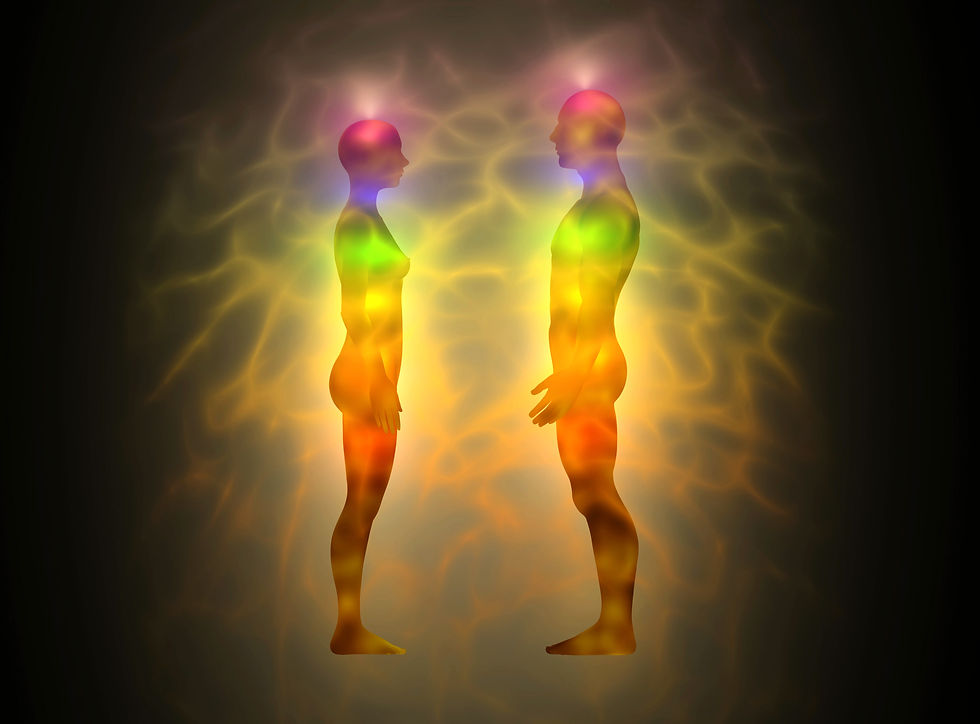
When I talk about internal state, I'm talking about the combination of your emotional baseline, your energy level, and your nervous system's overall condition at any given moment: are you depleted or resourced, anxious, or grounded, reactive, or steady.
This isn't the same as a passing mood. A mood is temporary and situational: you're irritated because you're stuck in traffic, you're happy because you got good news. Internal state is more like the climate you're operating from. It's the baseline you return to once the immediate mood passes. And for a lot of people, that baseline has quietly settled into something depleted, anxious, or braced, without them ever consciously choosing it or even fully noticing it.
You can be someone who, on paper, has good things in their life — relationships, work, health that isn't in crisis — and still be operating from a chronically depleted or anxious internal state. The state isn't a direct reflection of your circumstances. It's a reflection of what you've been carrying, how long you've been carrying it, and whether you've ever had the tools or the permission to set any of it down.
Why State Shapes Everything Else
Here's the part that tends to surprise people: your internal state isn't just something you experience. It's something that actively shapes what you notice, how you interpret events, what you're capable of, and what you end up creating in your life.
State shapes what you notice. When you're operating from a depleted or anxious state, your attention narrows — it's tuned to scan for threat and difficulty, because that's what a stressed nervous system is built to do. Opportunities, kindnesses, and openings that are genuinely present in your life can become invisible, not because they're not there, but because your state isn't oriented to perceive them. When your internal state shifts toward calm and resourced, the same external world suddenly looks different — not because it changed, but because you're now capable of seeing more of it.
State shapes how you interpret events. The exact same comment from a colleague can land as helpful feedback or as a personal attack, depending entirely on the state you're in when you hear it. This is why the same conversation can go fine on a good day and become a fight on a hard one: the content didn't change. Your capacity to receive it did.
State shapes your decision-making. Anxious, depleted states tend to produce short-term, reactive decisions, driven by a need to relieve discomfort right now rather than what genuinely serves you. Grounded, resourced states allow for clearer thinking, more patience, and decisions made from values rather than urgency.
State shapes what you tolerate. This one matters enormously in relationships. When your baseline state is anxious or depleted, you're more likely to tolerate things that don't really serve you — because you don't have the internal resources to hold a boundary, or because the fear of further depletion (through conflict, through loss) outweighs your sense of what you deserve. A more grounded, resourced state makes healthy boundaries dramatically more accessible, not because you suddenly became a different person, but because you have more internal capacity to hold them.
The Physical Reality Behind All of This
This isn't abstract or mystical. There's real physiology behind why state matters this much.

When you're operating from a chronically stressed or anxious state, your body produces elevated cortisol and operates in a heightened state of physiological alert. That has consequences far beyond how you feel emotionally: it affects your sleep, your inflammation levels, your immune function, your ability to think clearly, your impulse control, and your overall energy.
In other words, a depleted internal state isn't just an unpleasant feeling to push through. It's an active physiological condition that shapes your cognitive and emotional capacity in measurable ways. You genuinely have vastly less access to creativity, patience, and clear judgment when you're operating from a stressed baseline — not because something is wrong with you, but because that's how human physiology works under chronic stress.
This is also why trying to "think your way" into better decisions while ignoring your underlying state so often fails. You can have the right strategy and the right intention, and still make reactive, short-term choices if your nervous system is running on depletion. The strategy isn't the problem. The state underneath it is.
Why Most Approaches Miss This Entirely
Most personal development and goal-setting approaches focus almost exclusively on strategy: better plans, clearer goals, more discipline, sharper habits.
And strategy matters — I'm not suggesting otherwise. But strategy built on top of a depleted, anxious internal state tends to be fragile. It works for a while, through sheer effort, and then collapses when the state underneath it reasserts itself — because willpower is itself a depletable resource, and depleted states burn through it fast.
This is why so many people experience the same frustrating cycle: a burst of motivation, a period of real progress, and then a collapse back to old patterns — not because they lacked commitment, but because the underlying state was never addressed. The strategy was sound. The foundation it was built on wasn't stable yet.
Real, lasting change requires attending to both: the strategy and the state it's built on. Most approaches only address the first.
What It Looks Like to Actually Shift Your State

This is the part I want to make practical, because understanding why state matters is only useful if you know what to do about it.
Notice your baseline, not just your moods. Throughout an ordinary day, check in periodically: what's my actual internal operating climate right now? Depleted or resourced? Tense or settled? You're not trying to fix anything in this step — just building the habit of knowing where you are, which most people have never practiced.
Get curious about what's draining your state, not just what's stressing you in the moment. Often the things depleting our baseline state aren't the obvious stressors — they're the chronic, low-grade things: a relationship dynamic that requires constant vigilance, a job that doesn't align with your values, unprocessed grief or anger that's been quietly running in the background for years. Identifying these is more useful than trying to manage the symptoms they produce.
Build in genuine restoration, not just distraction. There's a real difference between activities that restore and replenish your nervous system — rest, enjoy time in nature, deep connection, fun, physical movement that feels good rather than punishing, anything that allows your body to relax and come out of “alert” mode — and activities that simply distract you from your state without actually shifting it. Scrolling, overworking, and numbing out all fall into the second category. They don't restore. They postpone.
Get present. A huge amount of what depletes our state is mental time travel — replaying the past, anxiously rehearsing, or fearing the future. Returning your attention to the present moment, even briefly, interrupts that anxiety and energy drain, and allows your nervous system a chance to settle. Because most present moments, examined directly, are not as threatening as the anxious mind makes them out to be.
Address what's really being carried, not just “managed.” If your depleted state is being driven by something specific — unprocessed grief, chronic anxiety, an unresolved relationship pattern — managing the symptoms (better sleep hygiene, more exercise) will help a little but won't resolve the underlying drain. At some point, the thing that’s being carried needs real attention, not simply better coping strategies around it.
The Shift That Changes Everything Else
Here's what I want you to take from this: the work of shifting your internal state isn't a side project to your real goals. It is, in many ways, the foundation that makes everything else achievable.
The relationship you want, the confidence you're reaching for, the version of your life that feels aligned rather than just functional — all of it becomes more accessible from a resourced, grounded internal state than it ever will from a depleted, anxious one. Not because state alone creates outcomes, but because state determines your capacity to notice, choose, act, and sustain the changes that do.
You don't need more effort layered on top of an exhausted state. You need to address the state itself.
If This Resonated…
If you've been working hard on your goals and your strategies and still feel like you're pushing against something invisible, your internal state might be exactly what's been overlooked. My free guide, "Why You Still Feel Stuck," explores this in more depth — including how your mind, emotions, and energy work together to shape your reality, often far beneath conscious awareness.
Download "Why You Still Feel Stuck" — free, and a genuine place to start.
You can't create a high-level life from a depleted internal state. The good news is, that state is something you can start shifting right away.
Michele Harris is a life reinvention coach, founder of Unbound & Limitless and creator of the URISE Method™. Michele helps people who feel stuck break free from what's holding them back so they can finally experience the love, confidence, success, peace, and fulfillment they desire. unboundlimitless.com


Comments